
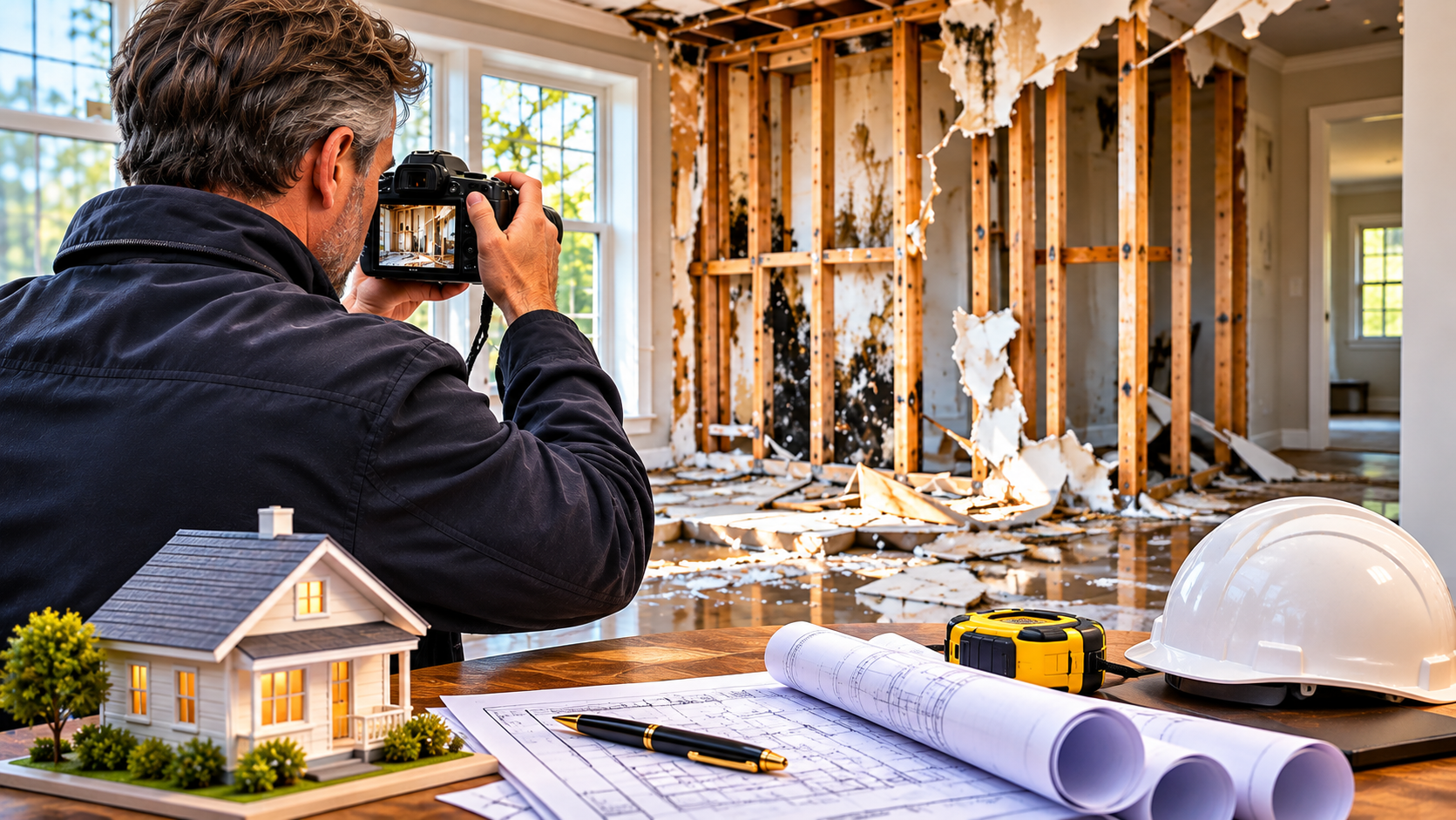
Making unforced property damage insurance claim mistakes in the immediate aftermath of a disaster can permanently reduce your final insurance settlement. When structural devastation strikes your home, the shock and chaos often push policyholders into hasty decisions that directly benefit the insurer.
Having reviewed thousands of loss files from executive positions within carrier claims operations, we know how initial missteps create justification for reduced payouts. Strategic claims defense requires avoiding critical pitfalls from the very first hour of physical loss.
Early Evidence Preservation and Notification Errors
The earliest mistakes after property damage involve delaying claim notification, failing to record comprehensive visual evidence, and throwing away damaged contents before inspection. Carrier adjusters rely heavily on initial proof to establish loss reserves and verify coverage.
Discarding ruined carpets, broken cabinetry, or waterlogged personal property destroys the physical proof required to substantiate replacement value. Taking thorough photographs, saving material samples, and logging every destroyed item ensures the insurer cannot downplay the true scope of your destruction.
Here are the first three homeowners insurance claim mistakes that routinely compromise recovery:
- Mistake 1 is delaying loss reporting because missing strict policy notification deadlines can lead to formal claim rejections.
- Mistake 2 is inadequate visual documentation because failing to take time-stamped photos and continuous videos allows adjusters to minimize damage severity.
- Mistake 3 is discarding ruined physical items prematurely because throwing away contents before inspection eliminates proof of ownership and quality.
For substantial private properties and family offices, historic architecture and custom millwork demand detailed photographic proof before cleanup begins. Preserving physical remnants stops carrier representatives from substituting generic pricing for your rare materials, preventing costly property damage insurance claim mistakes.
Premature Structural Repairs and Concealed Damage Pitfalls
Executing permanent repairs before an adjuster inspection and ignoring hidden moisture migration will severely deplete your final reconstruction budget. Property owners must take reasonable temporary mitigation steps to protect real estate from further harm, but rushing into permanent rebuilding alters the physical evidence.
Committing these severe insurance claim mistakes occurs when homeowners hire contractors to install new drywall, flooring, or framing before the carrier completes formal scoping. Once new materials are installed, the adjuster cannot confirm the original damage baseline and may deny coverage for those repairs.
The following three procedural errors frequently derail physical restoration funding:
- Mistake 4 is rushing into permanent repairs because making structural alterations before the carrier inspection can void coverage for those specific repairs.
- Mistake 5 is downplaying hidden structural decay because overlooking moisture behind finished walls leads to secondary mold growth and rot that carriers will exclude later.
- Mistake 6 is failing to track additional living expenses because forgetting to save temporary housing and meal receipts forfeits valuable policy reimbursements.
When managing severe building envelope losses for condo and co op boards, capturing initial damage accurately requires thermal imaging and moisture mapping before repair crews arrive. Overlooking moisture traveling through common utility shafts creates severe financial shortfalls across shared property lines.
Contractual Blindspots and Communication Traps
Failing to analyze policy endorsements and speculating on technical causes during adjuster interviews are severe homeowners insurance claim mistakes that insurers use to limit payouts. Carrier adjusters conduct recorded interviews specifically to find evidence of pre-existing wear, improper maintenance, or excluded perils.
When you make common property damage insurance claim mistakes like guessing when a plumbing failure began, the insurer can apply continuous leakage exclusions to deny the claim. If you are uncertain about the origin of structural failure, state clearly that the matter requires forensic engineering investigation.
Two major contractual and communication errors routinely diminish policyholder recoveries:
- Mistake 7 is ignoring policy terms and endorsements because failing to leverage code upgrade riders forces you to pay for mandatory municipal structural requirements out of pocket.
- Mistake 8 is guessing answers during recorded statements because speculating about property age or maintenance timelines gives adjusters ammunition to limit liability.
Corporate properties and business entities face immense financial risk when administrative oversights stall operational recovery. Knowing your exact contractual conditions prevents corporate claims staff from applying inappropriate depreciation schedules or enforcing exclusions that do not apply to your loss.
Premature Settlements and Navigating Complex Losses Alone
Accepting an opening settlement check as final and attempting to manage complex structural claims without professional advocacy are the final major mistakes after property damage. Carrier opening estimates serve as conservative starting baselines designed to control loss reserves rather than reflect true local building costs.
Falling into these critical insurance claim mistakes occurs when exhausted property owners accept an inadequate offer just to end the process. An initial check rarely accounts for hidden water damage, municipal building code updates, or current trade labor shortages.
The final two major errors that jeopardize property recovery include:
- Mistake 9 is accepting the first settlement offer as final because initial estimates rarely cover the full scope of required structural repairs.
- Mistake 10 is handling complex catastrophe claims alone because negotiating without expert claims advocacy leaves you at a massive disadvantage against corporate adjusters.
Eliminating widespread property damage insurance claim mistakes allows you to demand the full financial payout promised by your insurance policy. Demanding line-item forensic estimates forces the carrier to address documented construction realities rather than relying on arbitrary internal formulas.
FAQs
What is the most financially damaging error after property damage?
The most damaging error is discarding destroyed belongings before the insurance adjuster inspects them and failing to capture photographic proof. Without physical documentation or time-stamped imagery, insurance adjusters can refuse payment by claiming the damaged items never existed.
Can you cash an initial insurance check without closing your claim?
Yes, you can cash an initial settlement check provided it represents an undisputed partial payment and contains no restrictive release language. You must clarify in writing to your carrier that you are accepting the funds as a partial advance while your claim remains open.
How do code upgrade endorsements protect your reconstruction budget?
Code upgrade endorsements provide specialized funds to pay for modern municipal building requirements that were not present in the original structure. Without this specific coverage rider, homeowners must pay out of pocket for mandatory electrical, plumbing, and structural upgrades.
Why is it better to wait before giving a recorded statement?
You should avoid immediate recorded statements because policyholders often speculate on technical causes while under severe stress. Inaccurate statements regarding maintenance history or damage timelines give carriers ammunition to enforce restrictive policy exclusions.
Bulletproofing Your Property Recovery from Inception to Payout
Avoiding widespread property damage insurance claim mistakes gives you the strategic leverage needed to secure complete repair funding. Taking control of documentation, managing communications, and rejecting low opening offers prevents insurance carriers from shortchanging your structural restoration.
We combine former carrier executive insights with forensic construction analysis to ensure every dollar owed under your policy is recovered. Connect with Eagle Adjustment to schedule a comprehensive claim evaluation and protect the long-term value of your real estate investment.


